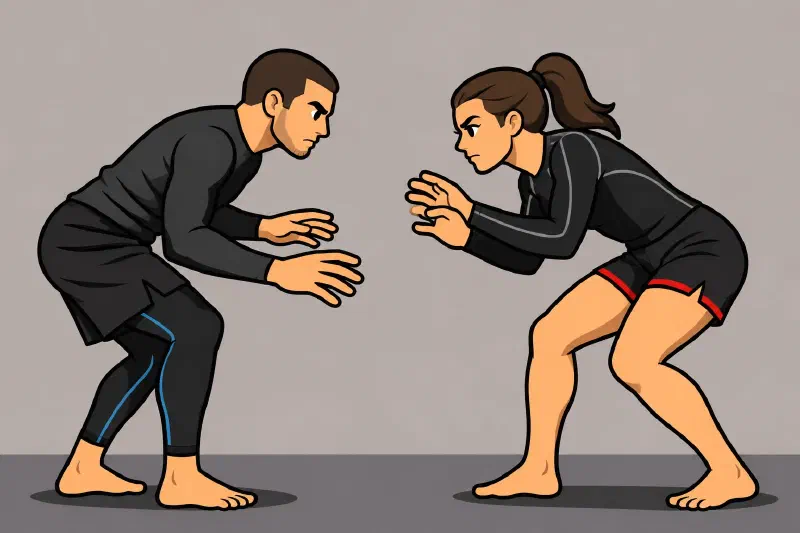
Your first BJJ class: what to expect
Expect a warm-up, a technique shown by the coach and drilled with a partner, then some light positional sparring. Wear a T-shirt or rashguard and shorts with no pockets or zips, bring water and sandals, arrive 15 minutes early, tell the coach you are new, and tap early whenever something hurts or feels wrong.
Your first BJJ class will most likely go like this: a warm-up, one or two techniques shown by the coach and practised with a partner, and a short period of controlled sparring from a set position. Nobody expects you to know anything. Your only jobs are to turn up clean and on time, listen, tap when you need to, and come back for a second class.
Before you go
Message or call the gym first. Ask whether they have a beginners or fundamentals class, whether the session is gi or no-gi, and whether they can lend you a gi. Most gyms offer a free trial class or week, and most will ask you to sign a waiver.
Eat a light meal two or three hours beforehand and drink water through the day. Trim your fingernails and toenails, take off rings, watches and earrings, and tie back long hair. If you are not sure what BJJ actually involves, read what is Brazilian Jiu-Jitsu? first.
What to wear and bring
For a no-gi class or a trial without a gi:
- A rashguard or a fitted T-shirt you do not mind being stretched.
- Shorts without pockets, zips or belt loops, or leggings. Fingers and toes catch in pockets.
- Underwear that stays put. Many people wear compression shorts.
For a gi class, the gym will usually lend you a gi and a white belt. Wear a T-shirt or rashguard underneath if you prefer; many women do, and at many gyms men do too.
Bring:
- A water bottle.
- Sandals or flip-flops. Shoes never go on the mat, and bare feet never go in the toilets.
- A small towel and a change of clothes.
- A mouthguard if you already own one. It is not essential on day one.
You do not need to buy anything yet. When you decide to stay, the gear guide explains what is worth owning.
How the class runs
Arrive 15 minutes early, introduce yourself to the coach and say it is your first class. Mention any injuries. Some gyms line up by belt and bow at the start and end; just copy the person next to you. Customs vary, and the etiquette and hygiene guide covers the common ones.
Warm-up. Expect light jogging or mobility work, then BJJ movements across the mat: the hip escape (often called shrimping), bridging, the technical stand-up and sometimes breakfalls. These will feel clumsy. They do for everyone. If you want a head start, the solo drills page shows them.
Technique. The coach demonstrates a move, often two or three times from different angles, then you pair up and take turns. A first class might cover something from closed guard, a mount escape or a basic pin such as side control. Go slowly. When it is your partner’s turn, let them do the move; do not resist unless the coach says to.
Sparring. Many gyms end with positional sparring: you start in one position with a narrow goal, such as escaping mount, and reset when someone succeeds. Some gyms also have free sparring, called rolling. As a first-timer you may be asked to watch, or be paired with an experienced student who will move gently. Both are fine. It is also fine to say “I would like to just watch the rolling today.”
Tapping
Tapping is how you say stop. Tap your partner two or more times with your hand, firmly enough that they feel it. If your hands are trapped, tap the mat with your foot or say “tap” out loud. Your partner lets go immediately.
Three rules will keep you safe:
- Tap early. Tap when a joint lock is on and you do not know the escape, not when it starts to hurt. Tap to chokes as soon as you feel pressure building in your head.
- Tap to anything. Pain, panic, a cramp, someone’s weight on your ribs, a feeling that something is wrong. You never need a reason.
- Release at once. If your partner taps, or you think they did, let go and check.
Tapping is not losing. It is how training continues tomorrow. Experienced people tap many times a week.
What to say to partners
Keep it simple:
- “Hi, I’m new, this is my first class.” Say it to every partner.
- “Can we go slowly?” or “Can you show me that part again?”
- “My left knee is a bit dodgy, please go easy on it.”
- “Thanks” and a handshake or fist bump at the end.
Most people remember their own first day and are happy to help. If a partner is rough after you have asked them to ease off, tell the coach. A decent gym will deal with it.
A few things to avoid in your first weeks: do not squeeze someone’s head as hard as you can, do not use submissions you saw online on a partner who does not know what is happening, and do not coach other beginners. Control and listening earn trust faster than effort does.
How sore you will be
Expect to be more tired than the session seemed to justify. Grappling uses muscles in ways the gym and running do not. Common after a first class:
- Sore forearms and fingers from gripping, especially in the gi.
- A stiff neck and tight hips.
- Bruises on the shins, upper arms and ribs.
- Mat burn on the tops of the feet, knees or elbows.
This usually eases within two to four days, and your body adapts over the first few weeks. Sharp joint pain, pain that gets worse, numbness or anything involving your neck is different: stop and see a medical professional. This is general information, not medical advice.
Two classes a week is plenty to begin with. The guide on how often to train explains how to build from there, and common BJJ injuries covers the habits that keep small problems small.
How to pick a gym
You will train where you feel comfortable, so the atmosphere matters more than medals on the wall. During a trial, look for:
- Clean mats and facilities. Ask how often the mats are cleaned. Daily is the standard to expect.
- A beginner structure. A fundamentals class or a clear plan for new students beats being thrown into an advanced session.
- How upper belts treat beginners. Controlled, patient and helpful is the sign of a good room.
- Supervised sparring. The coach watches the rolls and steps in when needed.
- People like you. If you are over 40, look for other grey hairs on the mat. If you are a woman, look for other women training.
- A schedule you can keep. The best gym is the one you can reach twice a week for years.
- Clear terms. Understand the contract length and cancellation terms before you sign.
Warning signs include pressure to sign a long contract on day one, no trial class, dirty mats, and experienced students who treat sparring with beginners as a contest.
After the class
Shower as soon as you can and wash your kit after every session. Write down the one thing you remember from the lesson; it will be less than you think, and that is normal.
Then book the second class. The first month is mostly about learning to move and to relax. The white belt survival guide lays out what to focus on next, and BJJ after 40 adds advice if you are starting later in life.
What to remember
- You do not need a gi or any fitness base for a trial class. Clean athletic clothes with no zips or pockets are enough.
- Tapping is how you stay safe. Tap early, tap clearly, and release instantly when your partner taps.
- Tell every partner you are new. Good partners will slow down and help.
- You will be sore in unusual places for a few days. That fades within the first weeks.
- Pick a gym by its cleanliness, its beginner structure and how the higher belts treat new people.
Questions people ask
Do I need to get in shape before my first BJJ class?
No. The fitness that BJJ needs is specific and you build it by training. Go at your own pace, sit out a round if you need to, and let the coach know about any injuries or health conditions before class.
Do I need to buy a gi before my first class?
Usually not. Most gyms lend or rent a gi for a trial class, and no-gi classes only need a rashguard or fitted T-shirt and shorts without pockets. Ask the gym before you buy anything.
Will I have to spar in my first class?
It depends on the gym. Many keep new students to drilling and positional sparring for the first few sessions. You can always say no to a roll, and no reasonable coach will push you.
Am I too old or too out of shape to start BJJ?
Almost certainly not. Many people start in their forties or later. Tell the coach your situation, choose calm partners, and build up from one or two classes a week.
More on start here
- What is Brazilian Jiu-Jitsu?A plain explanation of Brazilian Jiu-Jitsu: how it works, what a class and a match look like, and how it differs from judo, wrestling and MMA.
- White belt survival guide: what to learn firstA priority order for your first 6 to 12 months of BJJ: survive, escape, hold position, then attack, with links to each skill.
- Mat etiquette and hygieneThe unwritten rules of the BJJ mat, plus practical hygiene: nails, kit washing, ringworm, staph, when to stay home and cauliflower ear.